
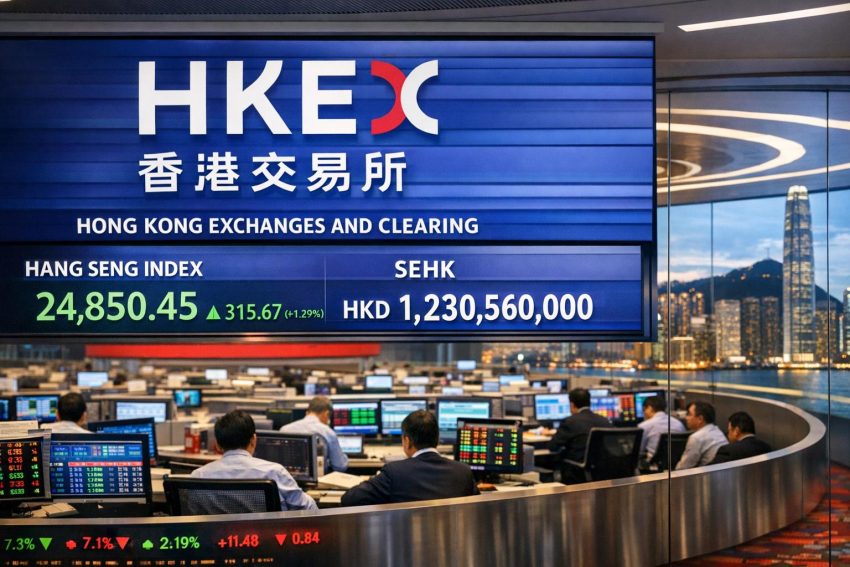
The Hong Kong Stock Exchange, commonly called HKEX or SEHK, is one of Asia’s principal securities markets. It provides a major venue for listing and trading companies from mainland China, Hong Kong and overseas jurisdictions. The market combines international capital, Chinese issuers, cross-border trading channels and a legal framework based in Hong Kong.
The terms HKEX and SEHK are often used interchangeably, though they do not refer to exactly the same entity. HKEX usually means Hong Kong Exchanges and Clearing, the publicly traded parent group. Its shares trade in Hong Kong under stock code 388. SEHK means the Stock Exchange of Hong Kong, the group company responsible for operating the cash securities market.
HKEX operates securities and derivatives markets, clearing houses, settlement systems, data services and trading infrastructure. Its listed products include ordinary shares, exchange-traded funds, real estate investment trusts, debt securities, warrants, callable bull and bear contracts, futures and options. The group also owns the London Metal Exchange, giving it a major position in industrial-metal trading.
For international investors, Hong Kong serves as a route into many Chinese companies without requiring direct access to a mainland brokerage account. The Stock Connect programmes also allow eligible investors to trade selected Shanghai and Shenzhen securities through Hong Kong. In the other direction, mainland investors can buy eligible Hong Kong-listed securities through Southbound Stock Connect.
History of the Hong Kong Stock Exchange
Organised securities trading in Hong Kong dates to the late nineteenth century. The Association of Stockbrokers in Hong Kong was established in 1891, during a period when the territory was expanding as a centre for shipping, banking and regional trade. The organisation was renamed the Hong Kong Stock Exchange in 1914.
Several exchanges operated in Hong Kong during the twentieth century. The Far East Exchange opened in 1969, followed by the Kam Ngan Stock Exchange in 1971 and the Kowloon Stock Exchange in 1972. Competition increased trading activity, but separate exchanges also created fragmented liquidity, inconsistent practices and uneven supervision.
The four exchanges later agreed to combine. The unified Stock Exchange of Hong Kong began operations in 1986, replacing the earlier venues. Electronic trading gradually took the place of floor-based dealing, and the market adopted central clearing and settlement arrangements as transaction volumes increased.
The 1987 stock market crash exposed weaknesses in Hong Kong’s market structure. Trading was suspended for four business days following sharp declines overseas. The closure remains one of the better-known episodes in the exchange’s history and led to reforms in regulation, clearing, market surveillance and risk controls.
Hong Kong Securities Clearing Company introduced the Central Clearing and Settlement System, known as CCASS, in 1992. CCASS became the main system for settling securities transactions and holding shares through approved participants. It remains central to the operation of the Hong Kong cash market.
A major restructuring followed in 1999 and 2000. The securities exchange, futures exchange and central clearing company were demutualised and placed under one holding group. Hong Kong Exchanges and Clearing listed its own shares on SEHK in June 2000. This created the slightly unusual position in which the exchange operator is also a company listed on the market it operates.
HKEX expanded into commodities in 2012 by purchasing the London Metal Exchange. The acquisition added futures and options for aluminium, copper, zinc, nickel, lead, tin and other metals. LME Clear, the associated clearing house, later became part of the group’s commodities operations.
The exchange has continued to revise its listing framework. Reforms introduced in 2018 allowed eligible companies with weighted voting rights to list. The reforms also opened a listing route for qualifying biotechnology companies that had not yet generated revenue. A later chapter of the Main Board rules created admission routes for specialist technology businesses, subject to market-value, research, revenue and investor-participation tests.
HKEX corporate and market structure
HKEX acts as the parent organisation for several trading and clearing businesses. Each business has a defined role, although the systems are connected operationally. The structure covers cash equities, exchange-traded derivatives, over-the-counter derivatives, commodities, clearing, settlement and market data.
| Organisation or system | Main function |
|---|---|
| Stock Exchange of Hong Kong | Operates the Main Board, GEM and the market for listed securities |
| Hong Kong Futures Exchange | Operates futures and options markets |
| Hong Kong Securities Clearing Company | Clears and settles cash securities through CCASS |
| HKFE Clearing Corporation | Clears transactions from the futures exchange |
| SEHK Options Clearing House | Clears exchange-traded stock options |
| OTC Clearing Hong Kong | Provides central clearing for eligible over-the-counter derivatives |
| London Metal Exchange and LME Clear | Operate and clear industrial-metal contracts |
This integrated structure allows HKEX to earn revenue from trading fees, clearing services, listing charges, market data, depository services and technology connections. Its commercial position differs from that of a government regulator. HKEX runs the markets and administers its Listing Rules, while statutory supervision rests mainly with the Securities and Futures Commission.
SEHK securities market
The SEHK cash market is the main exchange venue for Hong Kong-listed shares. It includes banks, insurers, property companies, retailers, telecommunications groups, internet platforms, manufacturers, healthcare businesses and energy producers. Many of the largest issuers earn most of their revenue in mainland China, even if their holding companies are incorporated elsewhere.
Most securities are quoted in Hong Kong dollars. Some products trade in renminbi or US dollars, and selected securities may be available through dual-counter arrangements. Under a dual-counter model, an investor can trade eligible shares in either Hong Kong dollars or renminbi, subject to broker support, counter eligibility and market liquidity.
Shares reach the market through exchange participants. These participants are generally brokerage firms or financial institutions licensed by the Securities and Futures Commission. A retail investor opens an account with a broker, deposits cash or securities and submits orders through the broker’s website, application, telephone service or trading terminal.
Investors do not normally send retail orders straight to SEHK. The broker checks the order, applies its own account controls and forwards accepted instructions to the exchange trading system. The order may then match with an order from another participant according to price and time priority.
Board lots and odd lots
Hong Kong shares generally trade in board lots. A board lot is the standard trading quantity set for a security. One company may have a board lot of 100 shares, while another may use 500, 1,000 or another quantity. The share price alone therefore does not show the normal minimum order value.
Suppose a share trades at HK$40 and has a board lot of 500 shares. One standard lot would have a market value of HK$20,000 before fees and taxes. A lower-priced share can require more capital if its board lot is much larger.
Amounts smaller than one board lot are treated as odd lots. Brokers may route odd-lot orders through separate facilities or match them manually. Odd-lot prices can differ from the main market price, and the bid-and-ask spread may be wider. Selling shares received through a bonus issue, inheritance or partial corporate action often requires use of the odd-lot market.
Tick sizes and order prices
SEHK uses price intervals known as tick sizes. The permitted interval depends mainly on the quoted price of the security. A low-priced share may move in fractions of a Hong Kong cent, while a high-priced share moves in larger monetary steps.
An order entered at a price that does not comply with the applicable tick size can be rejected. Brokers usually build these rules into their order screens, but investors using automated tools need to account for the exchange’s price schedule.
Hong Kong does not apply the same general daily percentage price limits used for many mainland Chinese shares. Prices can therefore move sharply during a session. The exchange does operate a volatility control mechanism for covered securities and derivatives. When a qualifying price movement triggers the mechanism, a short cooling-off period applies within a defined price band. This control is not a guarantee against losses or gaps in price.
Trading sessions and Hong Kong market hours
The securities market operates on Hong Kong business days. A standard day includes a pre-opening session, morning continuous trading, an afternoon session and a closing auction. All times below refer to Hong Kong time.
| Session | Typical time | Purpose |
|---|---|---|
| Pre-opening session | From 9:00 a.m. | Order entry, price formation and opening auction |
| Morning continuous trading | 9:30 a.m. to 12:00 noon | Regular order matching |
| Lunch break | 12:00 noon to 1:00 p.m. | Continuous cash trading pauses |
| Afternoon continuous trading | 1:00 p.m. to 4:00 p.m. | Regular order matching resumes |
| Closing auction session | After 4:00 p.m. | Determines the closing price for covered securities |
The pre-opening session gathers orders and calculates an opening price at which the greatest executable volume can be matched under the exchange’s auction rules. Not every order entered before the open will execute. Unmatched orders may carry into continuous trading if their order type and status allow it.
The closing auction performs a similar price-formation function near the end of the day. It reduces reliance on the final continuous trade as the official close and gives market participants a dedicated period for orders linked to closing prices. Index funds often use this session when adjusting portfolios.
Severe-weather trading
Hong Kong historically suspended exchange trading during high-level typhoon signals and black rainstorm warnings. That arrangement changed in September 2024. The securities and derivatives markets now generally continue operating during severe weather, supported by remote trading, clearing and banking arrangements.
Emergency closures or operational changes can still occur. Investors should check exchange notices and broker messages during a major weather event. A broker may also apply its own service restrictions if staffing, funding channels or technology systems are affected.
Derivatives trading hours
Many futures and options have longer trading hours than cash shares. HKEX operates after-hours sessions for eligible derivatives, sometimes described as T+1 sessions. These sessions allow investors to respond to European and US market movements after the Hong Kong cash market has closed.
Liquidity can differ between the daytime and after-hours sessions. Wider spreads and thinner order books may appear outside normal Asian business hours. Margin calls can also arise after a large overnight move, which matters for anyone holding leveraged positions.
Settlement, custody and CCASS
Hong Kong exchange trades in cash securities generally settle on a T+2 basis. The letter T means trade date, while the number indicates the business days that follow. A transaction completed on Monday would normally settle on Wednesday, assuming neither day is interrupted by a market holiday.
T+2 refers to settlement between market participants and the clearing system. A broker can impose earlier funding rules on its clients. Many retail brokers require cleared cash before accepting a purchase order, even though the market-side transfer occurs later. A sale may appear in the account immediately, but withdrawal of the proceeds can remain restricted until settlement.
CCASS calculates delivery and payment obligations among clearing participants. Securities are moved between participant accounts, while related cash obligations pass through approved banking arrangements. Netting reduces the number and value of transfers that participants must complete.
Shares held through CCASS are commonly registered in the name of HKSCC Nominees. The investor remains the beneficial owner through the broker or custodian’s records, but the nominee appears on the issuer’s registered shareholder list. This arrangement supports efficient settlement across a market with a large daily transaction volume.
The nominee structure affects how investors receive dividends, voting materials, rights issues and corporate-action notices. Information passes from the issuer through HKSCC and the broker or custodian before reaching the beneficial owner. Response deadlines set by a broker may be earlier than the issuer’s published deadline.
Main Board and GEM listings
HKEX operates two principal equity boards: the Main Board and GEM. The Main Board contains most large and established issuers, though it also admits eligible businesses under alternative financial tests. GEM serves smaller companies and issuers at an earlier stage of development.
A Main Board applicant generally must satisfy an admission test based on profit, revenue, cash flow and market capitalisation. The applicable combination depends on the listing route. The applicant must also address management continuity, ownership continuity, public float, accounting records, internal controls and the suitability of its directors and business.
Admission is not based on financial size alone. HKEX reviews the applicant’s operating history, regulatory record, business model, controlling shareholders, connected transactions and disclosure. The Securities and Futures Commission may also raise concerns under its statutory powers.
GEM applies a separate rule book and admission framework. Its issuers are often smaller and may have shorter commercial records than Main Board companies. Lower market capitalisation can result in thinner trading, wider spreads and greater sensitivity to shareholder concentration.
Reforms that took effect in 2024 introduced a route for eligible GEM companies to transfer to the Main Board under revised requirements. A transfer is not automatic. The issuer still needs to meet the relevant conditions and maintain a suitable compliance record.
Common classifications of Chinese issuers
Market commentary often places Hong Kong-listed Chinese businesses into categories based on incorporation and ownership. These labels are useful, but they are not interchangeable.
- H shares are shares of companies incorporated in mainland China and listed in Hong Kong.
- Red chips are generally offshore-incorporated companies controlled by mainland state-related interests and listed in Hong Kong.
- P chips usually refer to offshore-incorporated, privately controlled Chinese businesses listed in Hong Kong.
An H-share company can also have A shares listed in Shanghai or Shenzhen. The two share classes represent ownership in the same company but trade in different currencies, investor channels and market structures. Their prices can vary, sometimes by a wide margin.
How companies list on HKEX
An initial public offering normally begins with the appointment of professional advisers. These may include a sponsor, legal advisers, reporting accountants, valuers, underwriters and public-relations firms. The sponsor performs due diligence and helps the applicant prepare its submission under the Listing Rules.
The application includes financial statements, ownership records, business descriptions, risk disclosures, regulatory history and information about directors and controlling shareholders. HKEX reviews the filing and sends questions to the applicant and sponsor. Several rounds of comments may occur before the application reaches a listing hearing.
If approval is granted, the issuer publishes a prospectus and markets the offering. Hong Kong IPOs often include an institutional placing and a public subscription tranche. Allocation rules can move shares between those tranches if public demand reaches prescribed levels.
The FINI platform, introduced in 2023, modernised the IPO settlement process. It shortened the period between pricing and the start of trading, reduced the amount of money tied up during public subscriptions and connected brokers, banks, issuers, advisers and regulators through one digital workflow.
Investors applying for an IPO should not assume that admission indicates commercial quality. Exchange approval means the company has passed the applicable listing process; it does not represent a recommendation. New shares can open above or below their offer price, and heavily subscribed offerings can still perform poorly after listing.
Weighted voting rights
A weighted voting rights structure gives some shares more voting power than ordinary shares. It is commonly associated with founder-led technology businesses. Hong Kong permitted qualifying issuers with these structures from 2018 after losing several prominent listings to US exchanges.
The framework restricts who may hold enhanced voting rights and places controls on transfers. Certain resolutions must follow one-share, one-vote treatment. The issuer must also identify the structure clearly in its documents and stock name marker.
Economic ownership and voting control can differ substantially in such a company. A founder may control shareholder votes while owning a much smaller percentage of the economic interest. Investors need to assess board independence, related-party dealings, succession arrangements and the conditions under which enhanced rights end.
Biotechnology and specialist technology listings
Chapter 18A of the Main Board rules allows qualifying biotechnology companies to list without meeting the usual revenue or profit requirements. Applicants must satisfy tests concerning market value, product development, regulatory progress, sophisticated investment and available working capital.
These issuers can offer access to drug, medical-device and diagnostic research, but their finances often depend on continued funding. Clinical setbacks, regulatory delays or weak trial data can materially affect valuation. A successful scientific result does not always produce a commercially successful product either; markets have a habit of charging tuition for that lesson.
Chapter 18C provides a route for qualifying specialist technology companies. Covered fields may include artificial intelligence, advanced hardware, new energy, advanced materials and next-generation production systems. Commercial companies and pre-commercial companies face different admission thresholds and continuing obligations.
Continuing duties after listing
A company’s duties do not end once its shares begin trading. Listed issuers must publish annual and interim financial reports, announce inside information and report transactions covered by the Listing Rules. They must also maintain an adequate public float unless an approved exception applies.
Inside information generally refers to non-public information that could materially affect the price of listed securities. Examples can include a major acquisition, a serious financial deterioration, loss of a major licence, default on debt or a change in control. Disclosure rules aim to give the market equal access to material facts.
Connected transactions receive added attention because they involve parties linked to directors, senior shareholders or related companies. Depending on their size and nature, these transactions may require an announcement, independent financial advice or approval from shareholders who do not have an interest in the deal.
HKEX can ask an issuer to comment on unusual price or volume movements. It may halt or suspend trading if the market lacks adequate disclosure, if the issuer cannot maintain an orderly market or if the rules otherwise require a pause. A suspension can last far longer than investors expect, especially where financial reporting or audit problems remain unresolved.
Regulation and market supervision
The Securities and Futures Commission, known as the SFC, is Hong Kong’s statutory securities and futures regulator. It licenses brokers, asset managers and other intermediaries. It also investigates market misconduct, supervises regulated activities and exercises powers under the Securities and Futures Ordinance.
HKEX acts as market operator and front-line listing administrator. It reviews listing applications, monitors issuer compliance and administers trading rules. The SFC supervises the exchange’s performance of these functions and can intervene where wider market integrity or public-interest concerns arise.
The dual commercial and regulatory role of an exchange operator requires checks and formal oversight. HKEX earns revenue from new listings and trading activity, yet it must also reject unsuitable applicants, discipline issuers and suspend trading where needed. Statutory supervision helps manage that tension.
Market misconduct can include insider dealing, false trading, price rigging, disclosure of false or misleading information and stock-market manipulation. Conduct may lead to civil proceedings, criminal prosecution, licence sanctions or exchange disciplinary action. Directors and senior officers can face personal consequences where they take part in misconduct or approve false disclosure.
Stock Connect with Shanghai and Shenzhen
Shanghai-Hong Kong Stock Connect opened in November 2014. Shenzhen-Hong Kong Stock Connect followed in December 2016. The programmes connect exchange and clearing infrastructure without requiring companies to list their shares again in the other market.
Northbound trading allows eligible Hong Kong and overseas investors to buy selected A shares in Shanghai and Shenzhen through Hong Kong brokers. Southbound trading allows qualifying mainland investors to buy selected Hong Kong securities through mainland brokers.
Not every listed share qualifies. Eligibility depends on factors such as index membership, market segment, share class, market capitalisation and regulatory status. A security can be removed from the buy list while remaining available for sale, so investors should check current eligibility before placing an order.
Northbound trades are quoted in renminbi. Southbound orders involve Hong Kong-listed securities, though mainland investors fund transactions under the programme’s currency-conversion arrangements. Exchange rates and conversion procedures can affect the final cost.
Stock Connect applies daily quota controls at the programme level. It also has calendar rules because the Hong Kong and mainland markets do not observe identical holidays. Trading may be unavailable when the relevant clearing arrangements cannot support settlement across the coming business days.
Settlement practices differ between Hong Kong and mainland China. A-share securities and cash obligations do not follow the standard Hong Kong T+2 process in every respect. Brokers normally show applicable funding and sale rules before accepting a Northbound order.
Stock Connect also uses a nominee holding structure. HKSCC acts as nominee for Northbound holdings, while ownership records pass through the relevant clearing systems and brokers. Investors retain beneficial interests, subject to the legal and operational framework governing cross-border holdings.
ETF Connect expanded the programme to selected exchange-traded funds in 2022. Eligibility has since broadened, giving investors more index-based routes across the two markets. ETF qualification still depends on published criteria and periodic review.
Shares, ETFs, REITs and debt securities
Ordinary shares account for much of SEHK’s visibility and trading value, but the exchange lists several other security types. Each has a different legal form and return profile.
Exchange-traded funds trade through a broker in much the same manner as shares. They may track Hong Kong, mainland Chinese, regional or overseas equity indexes. Other funds follow bonds, commodities, currencies or strategy-based benchmarks.
A physical ETF holds all or part of the assets represented by its benchmark. A synthetic ETF obtains exposure through swaps or other derivative contracts. Synthetic replication introduces counterparty exposure, collateral arrangements and valuation considerations that do not arise in exactly the same form for a physical fund.
ETF investors should examine tracking difference, trading spread, fund size, turnover, management fees and replication method. A low annual fee does not guarantee a low ownership cost if the fund trades with a wide spread or follows its benchmark poorly.
Real estate investment trusts, or REITs, hold income-producing property or related assets. Hong Kong-listed REITs may own shopping centres, offices, hotels, industrial buildings or properties outside Hong Kong. Their distributions depend on rental income, financing costs, occupancy, asset values and the terms of the trust structure.
Debt securities also trade on HKEX, although institutional bond activity often occurs away from the exchange. Listed bonds can differ in currency, interest structure, seniority, maturity and issuer quality. Listing does not mean that an active secondary market will exist.
Warrants and callable bull and bear contracts
Hong Kong has a large market for derivative warrants and callable bull and bear contracts, usually shortened to CBBCs. Banks and other approved issuers create these products, which track an underlying share, index, currency or commodity.
A warrant gives exposure to price changes over a stated life. Its value depends on the underlying asset, exercise price, time remaining, implied volatility, interest rates and issuer pricing. Time decay can reduce value even if the underlying asset barely moves.
CBBCs contain a mandatory call level. If the underlying asset reaches that level, trading stops and the contract is terminated. Depending on the product category and the price movement, the investor may receive a residual payment or lose the full amount invested.
Both products use leverage. A small movement in the underlying asset can cause a much larger percentage movement in the product. Investors also face issuer credit exposure, trading-spread costs and the risk that market-maker quotes become wider during fast conditions.
These instruments are designed for short-term trading and hedging rather than as substitutes for ordinary share ownership. They do not provide voting rights or normal shareholder claims on the underlying company.
Futures and options
The Hong Kong Futures Exchange lists equity-index, stock, currency and interest-rate derivatives. Hang Seng Index futures and options are among its best-known contracts. Products based on the Hang Seng China Enterprises Index and Hang Seng TECH Index also attract institutional and retail activity.
A futures contract creates an obligation based on the future value of an underlying asset or index. An option gives its buyer a right, but not an obligation, to buy or sell under the contract terms. Sellers of options may face much larger obligations and must maintain margin.
Derivatives use margin rather than full cash payment for the exposure. This makes them capital-efficient, but it also magnifies gains and losses. If account equity falls below the broker’s requirement, the broker can demand more collateral or close positions.
Stock options cover selected Hong Kong-listed shares and ETFs. Their contract size normally relates to the board lot of the underlying security. Corporate actions such as share splits, rights issues and special dividends may result in adjustments to contract terms.
Currency derivatives include contracts linked to renminbi and major international currencies. Businesses may use them to manage exchange-rate exposure, while trading firms use them for relative-value or directional positions.
The London Metal Exchange
The London Metal Exchange operates a market for industrial metals used by producers, consumers, merchants and financial institutions. Its contracts provide reference prices for aluminium, copper, nickel, zinc, lead, tin and other materials.
Commercial users can hedge future purchases or sales. A manufacturer worried about rising copper costs may take a derivatives position intended to offset higher physical-market prices. A mining company may hedge expected production to reduce revenue uncertainty.
The LME uses trading methods that differ from a standard cash equity exchange. It has electronic trading, telephone trading and open-outcry ring trading. Its contracts also connect to an approved warehouse network used for physical delivery.
Ownership of the LME gives HKEX revenue and business exposure outside Hong Kong securities. It also brings operational, regulatory and legal risks associated with commodity markets. The nickel-market disruption of March 2022 showed how disorderly price moves can create difficult decisions for an exchange and clearing house.
Clearing and financial safeguards
A clearing house steps between the buyer and seller after a trade. Through a process called novation, it becomes the buyer to each seller and the seller to each buyer for covered transactions. This reduces direct bilateral exposure among participants.
Clearing houses collect collateral and margin, monitor positions and maintain default resources. Derivatives positions are commonly marked to market, meaning gains and losses are calculated as prices change. A participant with losses may need to provide more funds within a short period.
Default funds provide another layer of protection if a participant fails to meet its obligations. Clearing houses also impose membership standards, position controls and concentration monitoring. The available protections differ by product and clearing entity.
Central clearing reduces some counterparty risk but cannot remove financial loss. Sharp price moves, participant failure, operational outages and collateral shortfalls can still strain the system. Clearing rules also allow positions or collateral to be managed under default procedures, which may not match an investor’s preferred timing.
Trading costs and taxes
The displayed share price is only part of the transaction cost. A Hong Kong share trade can involve brokerage commission, exchange trading fees, regulatory levies, clearing charges and stamp duty. Custody, dividend collection, nominee services and corporate actions may attract separate broker charges.
Hong Kong stamp duty generally applies to purchases and sales of Hong Kong stock. The rate was reduced to 0.1% of transaction value for each side from November 2023. Treatment can differ for market makers, ETFs, derivatives and exempt transactions.
Broker commissions vary widely. Some firms advertise zero commission but recover revenue through platform charges, currency conversion, financing or other account fees. An investor should compare the full transaction statement rather than the headline commission alone.
Bid-and-ask spread is another real cost. Buying at the offer and immediately selling at the bid produces a loss even if the quoted midpoint has not moved. This cost can be minor in a heavily traded large-cap share and far larger in an illiquid small company.
Market indexes and benchmarks
The Hang Seng Index is the best-known benchmark for Hong Kong shares. It tracks major companies listed on SEHK and is widely used in media reports, index funds and derivatives. The Hang Seng China Enterprises Index tracks major mainland Chinese companies listed in Hong Kong, while the Hang Seng TECH Index focuses on large technology-related issuers.
Hang Seng indexes are administered by Hang Seng Indexes Company rather than by HKEX itself. This distinction matters because an index provider selects and maintains constituents, while the exchange admits securities and operates their market.
Other providers, including MSCI and FTSE Russell, maintain indexes that include Hong Kong-listed shares. Changes in index membership can produce heavy trading as passive funds rebalance. Inclusion may support demand, but it does not certify a company’s financial health.
Risks of investing through HKEX
HKEX-listed securities carry market, business, regulatory, currency and liquidity risk. Companies tied closely to mainland China may react to changes in property policy, consumer demand, technology regulation, credit conditions or capital controls. Hong Kong businesses can be sensitive to local property prices, interest rates and tourism flows.
Currency exposure is not confined to the quotation currency. A share may trade in Hong Kong dollars while the company earns revenue in renminbi and holds debt in US dollars. Changes among those currencies can alter profit, asset values and dividend capacity.
Liquidity varies sharply across the market. Major index constituents may trade billions of Hong Kong dollars per day. A small issuer may record few transactions, leaving investors with wide spreads and little capacity to sell a large holding without moving the price.
Shareholder concentration can also affect trading. If controlling owners and strategic investors hold most shares, the effective public float may be small even where the issuer complies with its formal float requirement. A thin free float can amplify price movements.
Offshore incorporation and variable-interest-entity arrangements require careful reading. Some Chinese businesses use contractual structures to obtain economic exposure to operations in industries with foreign ownership controls. Investors may own shares in an offshore holding company rather than direct equity in the operating business.
Secondary-listed companies may follow home-market rules in some areas and Hong Kong rules in others. Depositary arrangements, accounting standards and shareholder remedies can differ from those of a conventional primary listing. Weighted voting rights can also leave ordinary shareholders with less influence than their economic ownership suggests.
Trading suspensions present another concern. An investor cannot sell through the exchange while a share is suspended. Financial distress, delayed accounts, regulatory investigations or inadequate disclosure can cause a suspension to continue for months or years.
Reviewing a Hong Kong-listed investment
A sensible review begins with the issuer’s annual report, interim report and recent announcements. Revenue growth deserves attention, but cash generation, debt maturity, related-party balances and auditor comments often say more about financial resilience.
Investors should identify the legal entity whose shares they are buying, where that entity is incorporated and how it owns its operating assets. They should also check controlling shareholders, voting rights, public float and any pledges over major shareholdings.
For an ETF, the benchmark, replication method, fund assets and trading spread matter more than the share price alone. For a warrant or CBBC, the call level, expiry date, entitlement ratio, implied volatility and issuer are central to the risk calculation.
Order execution deserves similar care. A limit order sets the worst acceptable price, while a market-style order prioritises execution and can fill at an unexpected level in a thin order book. Board-lot size, tick interval and session type can also affect the result.
Why HKEX matters to issuers and investors
A Hong Kong listing can give a company access to international institutions, local investors and mainland capital through Southbound Stock Connect. Publicly traded shares may support acquisitions, employee compensation and future fundraising. The company also gains a visible market valuation, though that valuation can become uncomfortable during weak periods.
Investors can use HKEX to buy Hong Kong businesses, major Chinese companies, regional ETFs and structured products through one brokerage relationship. Futures and options provide tools for hedging or shorter-term positioning, while REITs and dividend-paying shares may appeal to income-focused portfolios.
HKEX’s position rests on the combination of Chinese corporate exposure and international market access. Its Hong Kong legal base, cross-border programmes, active IPO market, clearing infrastructure and derivatives business make it more than a conventional share-trading venue.
The distinction between the corporate group and the securities exchange remains useful. HKEX refers to the parent operator with securities, derivatives, clearing and commodities businesses. SEHK refers to the exchange on which Hong Kong shares and related securities trade. Knowing which entity performs each function makes market rules, fees, settlement and regulation much easier to interpret.